The Gaming Community Is a Better Dating Pool Than You Think
Most people treat “where to find someone to date” as a platform question. Which app? Which site? Which algorithm? The platform matters — but it’s downstream of something more fundamental: the conditions under which genuine attraction forms in the first place.
Gaming communities — by accident of their structure — create unusually good conditions for real connection. Here’s why that’s true, and what it means for how gamer singles should think about where they invest their social energy.
Shared Identity as the Fastest Relationship Shortcut
Relationship research consistently identifies shared values and shared identity as more predictive of long-term compatibility than shared interests. There’s a difference between two people who both happen to like hiking and two people who both organize their social lives around gaming. The latter is an identity overlap. That’s a different kind of commonality.
When you meet someone in a gaming context — a co-op session, a Discord server, an online event — you already know something meaningful about them. They’re someone who commits to things (any MMO player knows this). They can handle frustration. They care about community. They have a sense of humor that probably runs in a specific direction. You haven’t learned this from a profile. You’ve observed it over hours of actual interaction.
Real Talk Over Time: How Voice Chat Builds Intimacy
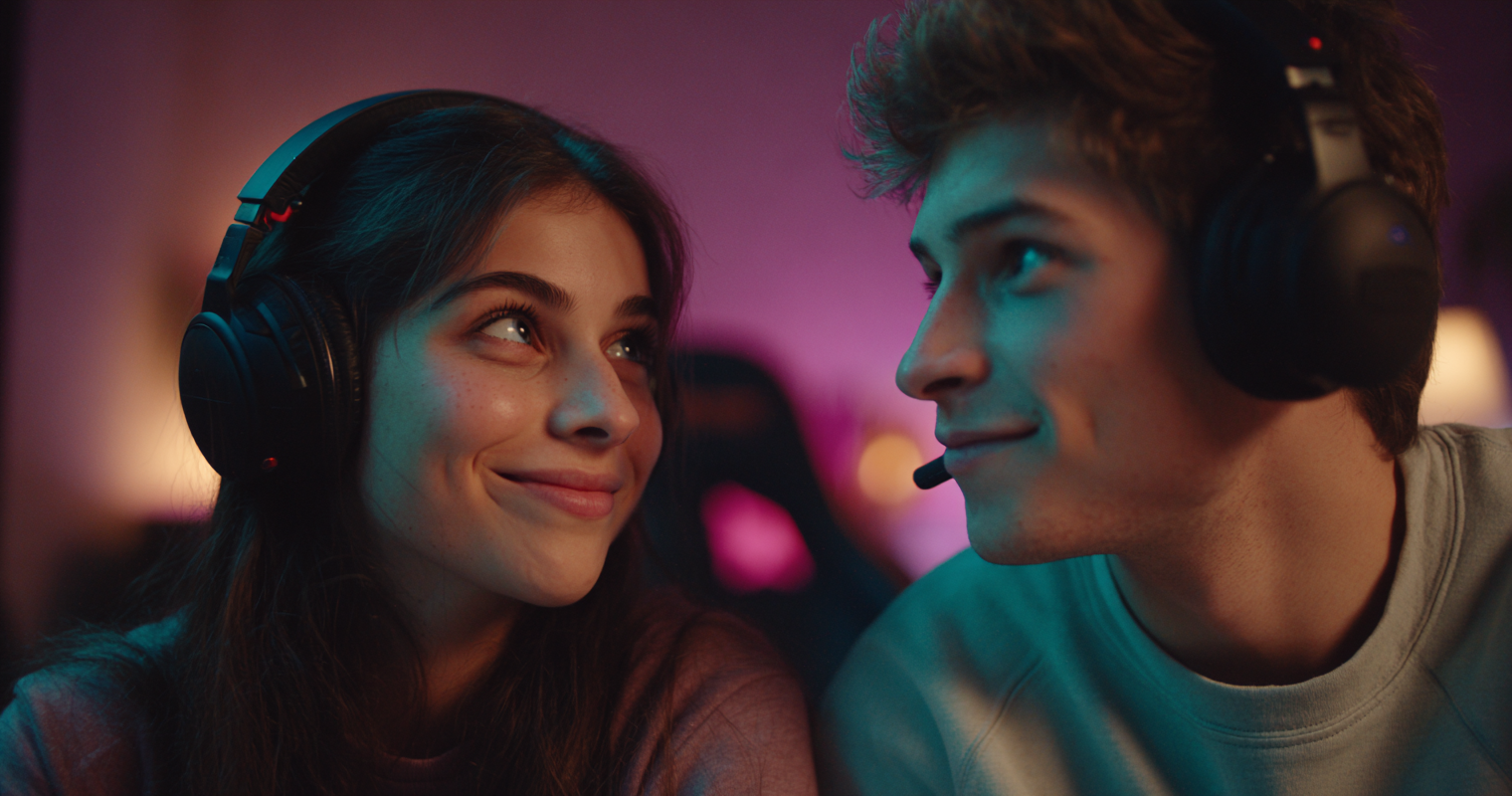
This is the underrated one. Extended voice communication in gaming — party chat, Discord, in-game comms — is a genuinely unusual social context. You’re talking with someone regularly, over long periods, while both of you are doing something else. That combination removes a lot of the social performance anxiety that makes early dating awkward.
You’re not performing on a date. You’re just playing a game and talking. And over time, the person’s actual personality comes through — their patience, their humor, the way they react when something goes wrong, what they sound like when they’re genuinely excited about something. This is intimacy built through accumulated contact, which is exactly how it forms in non-dating contexts too.
A PubNub survey on gaming and social connections found that 43% of gamers reported finding friendship and/or love through the gaming chat function. Forty percent said they met more people — including love interests — through gaming than in person. This isn’t a niche finding. It’s describing how a significant portion of gaming’s social infrastructure actually works.

Where Connection Actually Starts for Gamers
Multiplayer Games and Cooperative Settings
The social architecture of multiplayer games — especially MMOs, co-op games, and competitive team games — creates repeated, extended contact with a consistent group of people. This matters because familiarity is one of the most reliable predictors of attraction. The more exposure you have to someone in a positive shared context, the more your brain registers them as someone safe, familiar, and worth investing in.
Gaming’s reach as a social connector is substantial — Statista data on gaming and social connections shows that 82% of U.S. gamers agree gaming has introduced them to new friends. That’s not a side effect of gaming — it’s a structural feature of how these environments work.
Guilds, raid groups, regular squadmates — these aren’t just game features. They’re small communities with their own cultures, inside jokes, and history. The conditions for genuine connection inside them are better than most people give them credit for.
Discord Servers and Gaming Communities
A well-run gaming Discord server is one of the stranger underappreciated social environments of the current era. Regular text channels, voice channels for specific activities, events, recurring contact with the same group. If you spend six months in an active gaming community, you’ve developed real relationships with some of those people — not just online acquaintances.
The complication is that these aren’t explicitly romantic contexts. The transition from “community member” to “person I’m interested in dating” requires a conversation that can feel disruptive to a community you care about. It works — plenty of gaming relationships start here — but it’s not frictionless.
Dedicated Gamer Dating Platforms
The most direct route. The context is explicit: everyone on the platform has declared an interest in dating and an identity as a gamer. The ambiguity that stalls gaming-community connections is removed by design. You already know why both of you are there. The LFGdating app exists precisely to provide this context — a space where gaming is the premise, not the disclosure.
Why Gaming-Born Connections Have Built-In Advantages
You Already Know How They Handle Pressure
This is not a small thing. Boss fight behavior is remarkable data on a person. Do they rage quit? Blame others when something goes wrong? Adapt their strategy when the first approach fails? Encourage the group when the run is clearly going sideways? Do they get obsessive and stop being fun to play with?
You learn this after a few hours of gaming together. You might not learn the equivalent information about someone you met at a bar until you’ve been dating for a year.
Collaborative Problem-Solving as a Relationship Skill Preview
Games are structured conflict resolution. Two people working through a difficult co-op section have already demonstrated they can function as a unit under stress — dividing roles, communicating under time pressure, adapting when something doesn’t work. These aren’t just game mechanics. They’re a preview of partnership skills that matter considerably more in real life than they get credit for.

The Transition: From Squadmate to Something More
When to Move from In-Game to Real Connection
There’s no universal timeline, but some reliable signals: conversations regularly extend beyond the game after sessions end. You start choosing to game with them specifically rather than just whoever’s online. You find yourself thinking about something they said hours after you’ve logged off. One of you mentions something about wanting to keep talking outside of the game context.
When you’re there, the move is to find out if there’s a channel for actual conversation — not as a big moment, just as a natural next step. The context shift from gaming chat to direct communication is less dramatic than people tend to make it.
Green Flags and Red Flags in Gaming-Born Connections
Green flags: They respect your playstyle even when it differs from theirs. They’re curious about you as a person, not just as a party member. They remember things you mentioned in passing weeks later. They handle losing gracefully — or at least with good humor. Conversations feel easy and go longer than the gaming does.
Red flags: They only engage during active gameplay and go quiet or cold otherwise. They get hostile when things go wrong and need someone to blame. They’re vague or evasive about their life outside gaming. They treat you differently depending on whether they need you for a run.
Where This Leaves the Single Gamer
The psychology of gaming-born connection is genuinely favorable — the shared identity layer, the accumulated voice-chat familiarity, the observable-under-pressure dynamic. Gaming communities are worth taking seriously as social environments where real relationships form, not just as places to kill time before the dating starts.
The most intentional version of this is using a dedicated gamer dating platform alongside — or instead of — hoping someone in your raid party turns into something more. The context is clearer, the signal-to-noise is better, and you don’t have to risk an awkward conversation in a Discord you’ve been part of for two years. And if you want the data on what those relationships look like long-term, the research on gaming couples satisfaction scores makes a strong case.
Gaming gives you better-than-average data on people. Use that. And find a context where everyone’s already shown up for the same reason you did.
Leave a Reply
You must be logged in to post a comment.