The State of Mainstream Dating in 2026 (It’s Not Great)
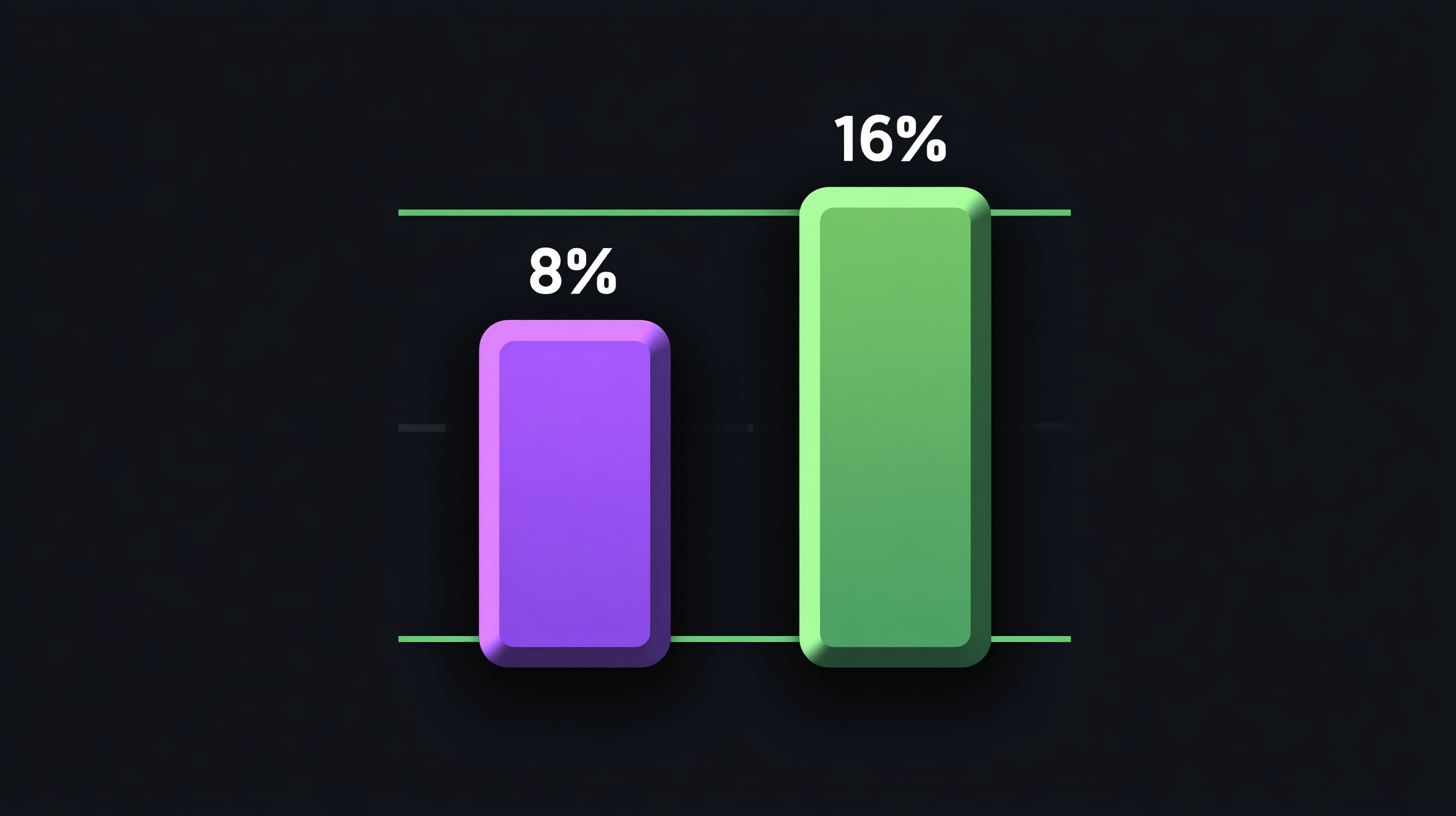
The decline of mainstream dating apps isn’t a rumor anymore — it’s in the quarterly reports. According to GetStream.io’s 2026 dating app analysis, Tinder’s paying users fell to 8.8 million in Q4 2025, down 8% year over year. Bumble lost 16% of its paying user base in the same period. Match Group, the parent company behind multiple major platforms, reported a 5% decline in paying users to 14.9 million in 2024.
These numbers reflect something people who’ve used these apps already know from experience: 78% of Americans now report feeling burned out by dating apps, per a Forbes Health survey. That’s the majority — not a fringe complaint.
The question isn’t whether the mainstream model is failing. It’s whether there are better alternatives. For gamers and geeks, specifically, the answer matters more than it does for most.
Option 1 — Mainstream Apps (Tinder, Hinge, Bumble)
The experience for a gamer on a mainstream platform
Here’s the specific problem mainstream apps have for gamers and geeks: your identity is a disclosure decision you have to make repeatedly, and the stakes of that decision are uneven. Say too little about gaming and you attract matches who’ll eventually see it as a problem. Lead with it and you risk the swipe-left from people who’ve already decided what kind of person games.
On a platform optimized for broad appeal, gaming is a niche interest you manage rather than a shared premise you build from. The filter that would make your matches genuinely compatible doesn’t exist at the platform level — it has to happen conversation by conversation, which is slow, inefficient, and emotionally taxing.
Volume without signal is just noise
The swiping model maximizes exposure and minimizes commitment per interaction. That design choice produces a very specific outcome: lots of matches with low compatibility, followed by attrition through conversation, followed by the occasional person who turns out to be a good fit after significant investment. The burnout statistics cited above are the predictable result of this math applied over months or years.
The identity problem is structural, not fixable
A mainstream app cannot solve this by adding a “gamer” tag or “looking for: someone who games.” The issue isn’t the filter — it’s the culture of the platform and the self-selection of its user base. When the premise of the app is broad appeal, niche identity is always an edge case to manage, not a foundation to build from.
Option 2 — Discord Servers and Gaming Communities
When it works (and why that’s rarer than it sounds)
People do meet partners through gaming communities. It happens on Discord, in MMO guilds, in TTRPG groups, in the chat of someone’s Twitch stream. Organic connection through shared activity is real, and it carries a kind of authenticity that a dating profile cann’t always replicate.
But it’s worth being honest about the math. Most people in any given gaming community are there to game, not to date. The percentage who are actively looking for a relationship at any given time is small. Finding that overlap, at scale, without awkward over-signaling, is genuinely hard.
The social-pressure problem
Dating within an existing community adds stakes that a dating platform doesn’t have. If it goes well, great. If it doesn’t — if there’s an awkward rejection, a miscommunication, a breakup — you’re not just navigating a bad date. You’re navigating whether you can still be comfortable in the community you were already in. Many people, reasonably, decide the risk isn’t worth it.
No intent signal, no matching, no profile
Discord and guild communities provide context and shared interest — but no mechanism for expressing dating intent, no matching system, no profile structure for communicating who you are and what you’re looking for. You’re relying entirely on organic conversation to surface the relevant information, which works sometimes and takes a very long time most of the time.
Option 3 — Dedicated Gamer and Geek Dating Sites
What identity-first design actually means
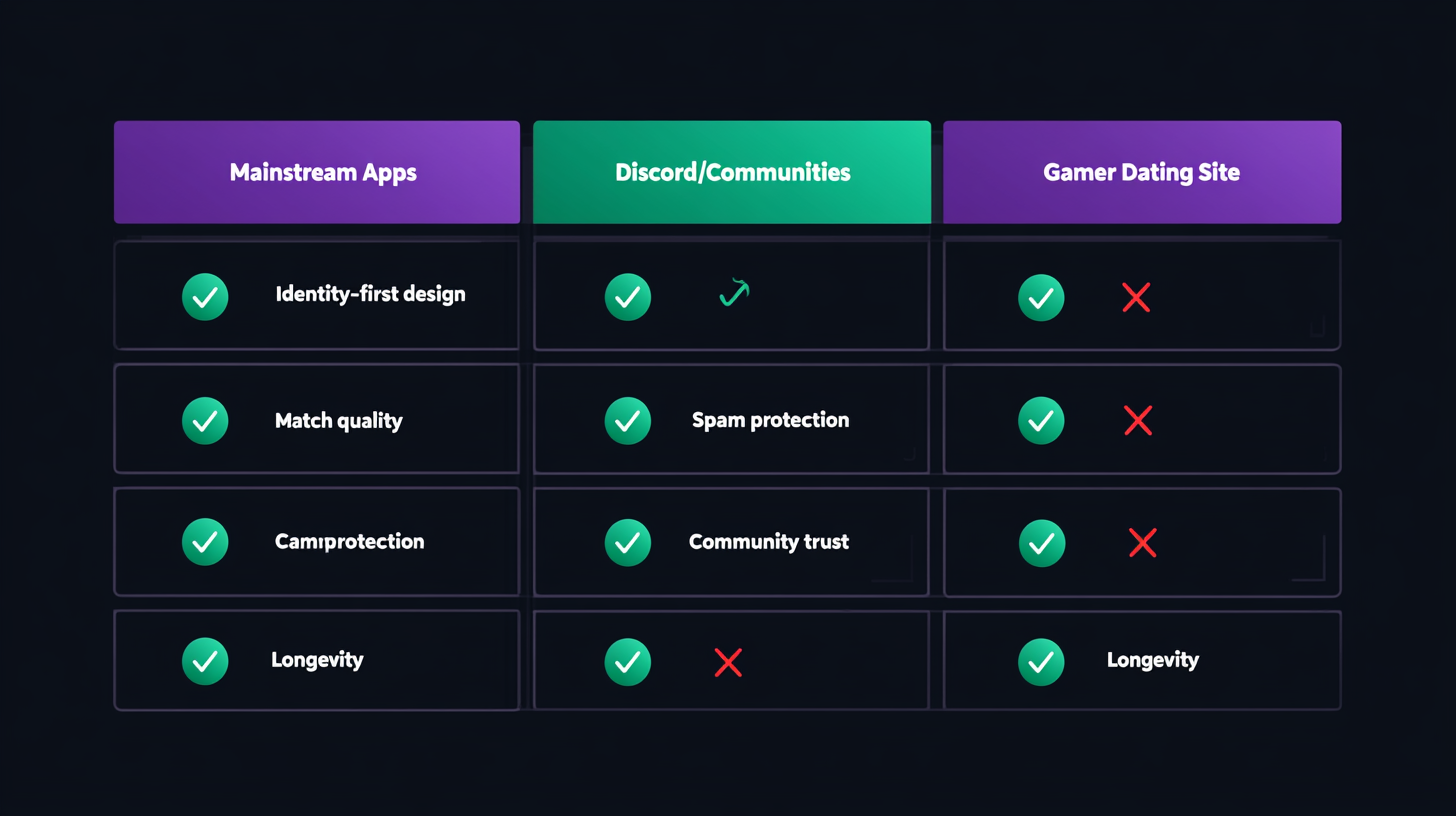
A platform built for gamers isn’t a mainstream app with a gaming filter. The architecture is different from the premise up: every person who signs up is someone who self-identified as a gamer or geek. The shared foundation exists before the first match is made. That’s a fundamentally different starting position than filtering a large general population for the subset who happens to play games.
Structural spam and fake-profile elimination
One of the consistent problems on mainstream apps is the volume of bots, fake profiles, and low-quality accounts that come with scale at no cost. LFGdating addresses this structurally: every new profile is reviewed and approved by a human team before it goes live. The low-cost premium tier ($15/month) further filters for users who are serious — because people running spam campaigns don’t pay $15 per account at volume.
The result is a platform where the profiles you see belong to real people who are there for real reasons. That’s a meaningful quality-of-experience difference.
What 13 years of operation tells you
Most dating apps don’t survive a decade. The ones that do have communities that actually found value in the platform — enough to stay, enough to tell other people, enough to keep the ecosystem alive. LFGdating has been operating since 2012. The founders are publicly named, personally reachable, and celebrate when paying subscribers cancel because they found someone. That’s an unusual combination that reflects something real about how the platform is built and run.
What the Data Shows About Match Quality
The WhichDating State of Online Dating 2026 report puts the advantage of niche platforms at 20–30% better compatibility outcomes compared to mainstream alternatives. That gap has a straightforward explanation: when you filter by identity at the platform level, you’re starting every match from a position of genuine overlap rather than working toward it.
Less swipe volume, higher average quality. The math works differently than the mainstream model, and it works better for the people who care about outcome more than options.
The Honest Recommendation
If you’re a gamer or geek who’s serious about finding a partner — not someone who tolerates gaming, but someone who shares it — the argument for a mainstream app gets thinner when you do the math. The identity problem is structural. The burnout is documented. The alternative has been around for 13 years and was built by people who were exactly where you are now.
Download the LFGdating app or join on the web. It’s free to start, the profiles are real, and everyone there already cleared the first hurdle before you arrived.
Leave a Reply
You must be logged in to post a comment.